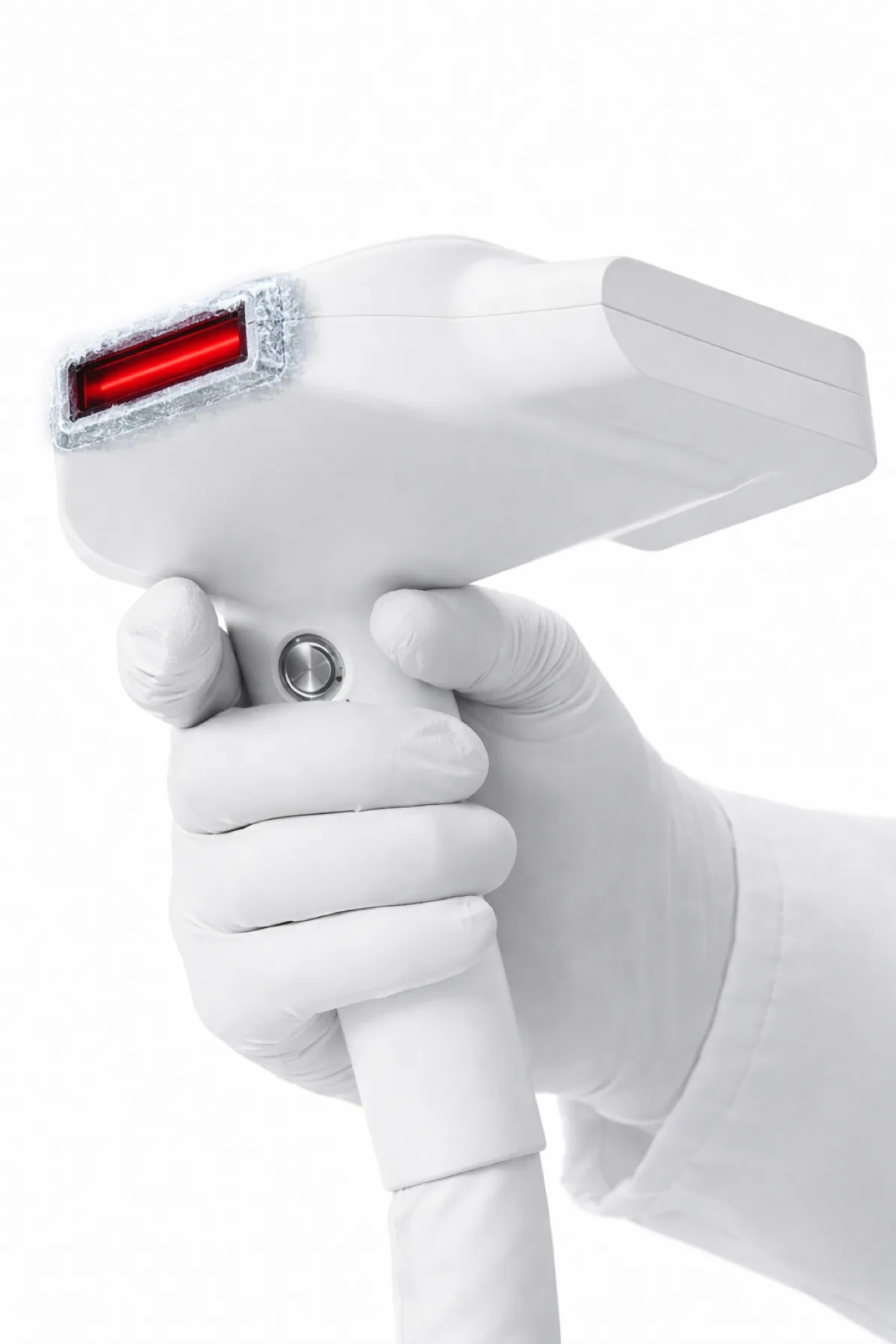
IPLASER handpiece: emitter window close-up

Updated

Technology · since 2013

IPLASER: Innovatione technology

A light technology based on IPL: a narrow band of the spectrum instead of a broad one, and three pulses per flash. Innovatione has been developing it since 2013.

No equivalent in the worldThree pulses per press. In 2013 Innovatione was the first to split a flash into three pulses. No hair removal system had worked this way before IPLASER.
  • 3pulses per flash
  • 755 · 560IPLASER handpieces
  • 2013year the technology was created

Not one hit but three pulses. The skin cools in the pauses, the target does not.

History

IPL plus a narrow band

Classic IPL is a pulsed lamp with a broad spectrum: the light goes into the target and into the skin around it. In 2013 Innovatione took a different path: it narrowed the band by filtering and split the flash into three pulses. Hence the name: IPL plus a narrow band.

IPLASER is not a diode or alexandrite laser. It is Innovatione’s own light control system.

In short

Light sourcePulsed lamp with narrow-band filtering
Energy deliveryThree pulses per flash
CoolingCoolSense, temperature sensor in the handpiece
GelNot needed
HandpiecesIPLASER 755: 755–1064 nm
IPLASER 560: 560–1064 nm
DeviceiPRO MINI
Since2013
The light spectrum: what the filter leaves
The broad spectrum of a pulsed lamp and the narrow IPLASER band: the filter cuts the short wavelengths, the IPLASER 755 handpiece leaves 755–1064 nm, the IPLASER 560 handpiece leaves 560–1064 nm Cut by the filter short wavelengths heat the skin the most 755–1064 nm Broad spectrum: the light goes into the target and the skin around it 400 560 755 1064 nm visible light near infrared

IPLASER 755 handpiece, hair removal. A narrow-band filter cuts the short wavelengths that heat the skin most and leaves the 755–1064 nm range absorbed by hair melanin.
Three pulses

Why split a flash into three pulses

A conventional system delivers its energy in one pulse, and the skin heats up to the pain threshold. IPLASER splits the flash into three pulses: the epidermis cools in the pauses while heat builds up in the target, the hair follicle, pigment or vessel. This lets the energy rise without a pain peak.

One pulse
discomfort threshold all the energy at once
IPLASER
discomfort threshold pulse pause pause
  • flat pulse, no decay
  1. Pulse 7–14 msLight is absorbed by the target pigment
  2. Pause 300 msThe skin releases heat and cools down
  3. Three pulsesHeat builds up in the target without a pain peak

CoolSense

Smart cooling in each handpiece

The temperature sensor is a thermocouple on the metal sapphire frame that touches the skin. The device measures the temperature in real time and holds the required cooling level on its own, without overcooling the skin and without overheating on a long shift.

  • Thermocouple on the sapphire frame
  • Automatic cooling control
  • All-day work with no cool-down breaks
More

CoolSense is a cooling system with a temperature sensor right in the handpiece: a thermocouple on the metal sapphire frame that touches the skin. The device sees in real time how hot the emitter window has become and holds the required cooling level on its own.

This protects the skin from overheating during the treatment and keeps it from being overcooled. For the salon it means stable work on a long shift, with no breaks for the device to cool down.

Thermocouple on the metal sapphire frame, where the handpiece touches the skin

IPLASER handpiece covered with frost from cooling
No equivalent in the worldA thermocouple on the sapphire frame measures the temperature at the point of contact with the skin, and the software holds it throughout the treatment, so the skin is not overcooled.

Inside

The path of light in the handpiece

From the lamp to the skin, the light passes through a filter and a sapphire window. The skin cools in the pauses between pulses while heat builds up in the target.

Diagram of the IPLASER handpiece: pulsed lamp, narrow-band filter, sapphire window in a metal frame with a thermocouple, with skin and hair follicles under the window 1 2 3 4 epidermis target: follicle
Simplified diagram, not to scale. The pulse rhythm is slowed down.
  1. Pulsed lampThe light source, as in IPL. Each flash is split into three pulses.
  2. Narrow-band filterCuts the short wavelengths that heat the skin most. The 755 handpiece leaves 755–1064 nm, the 560 handpiece leaves 560–1064 nm.
  3. Sapphire windowThe emitter window: light reaches the skin through it. The metal frame of the sapphire touches the skin.
  4. Thermocouple on the sapphire frameMeasures the temperature at the point of contact with the skin. CoolSense uses it to hold the required cooling level.
  5. Three pulses per flashLight travels this path three times per press. The skin cools in the pauses while heat builds up in the follicle.

Control

Protocols instead of manual settings

Specialists change. That is why treatment parameters live in the device software, not in one person’s experience.

iPRO MINI: 4 intensity levels with preset protocols

Level 1delicate areas
Level 2face, neck
Level 3body
Level 4dense hair
Abovenot available
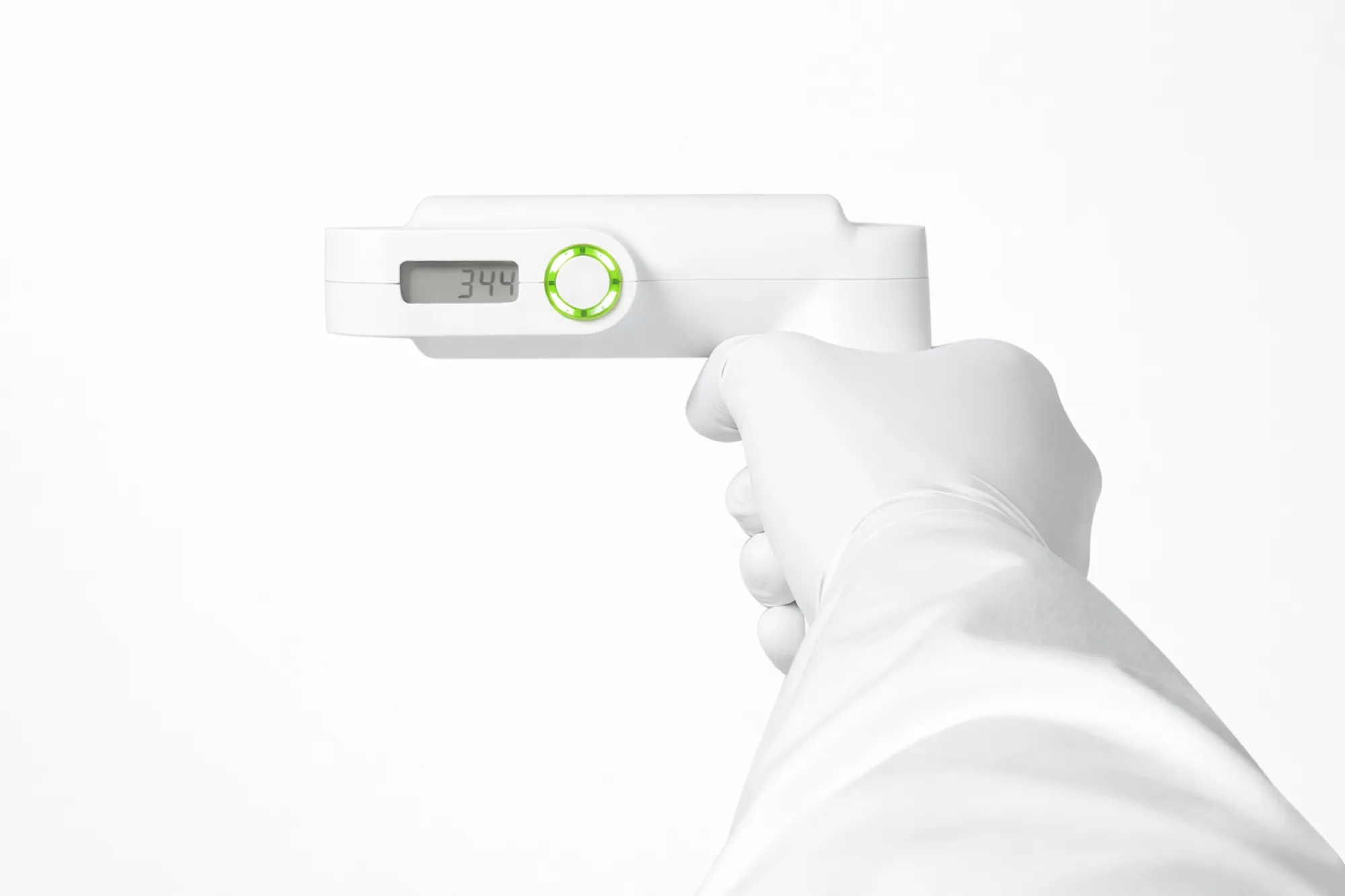
IPLASER handpiece in a gloved hand, the display shows the treatment level
  1. Preset protocolsReady-made treatment protocols: the specialist chooses a level rather than setting parameters by hand
  2. Energy limitThe software limits the maximum energy, so a new specialist has less risk of error
  3. InterfacePower levels and starting the treatment with one touch

Comparison

IPLASER, IPL and lasers: what is the difference

IPLASERClassic IPLDiode laserAlexandrite laser
Light sourcePulsed lamp with narrow-band filteringPulsed lampLaser diodeAlexandrite crystal
Spectrum755–1064 nm band for hair removalBroad, cut by a filterOne or several wavelengths, usually 808 nm755 nm
Energy deliveryThree pulses per flashUsually one pulseA series of pulses, often in sliding modeSingle pulses
GelNot neededUsually neededUsually neededUsually not needed, cooled by air or cryogen

A comparison of general principles. For the parameters of a specific device, see its specifications.

Video

The technology on video

  • 8:22

    Technology

    Explained by the inventor

    Sergey Moskvin on the three-pulse system compared with other solutions on the market.

Questions and answers

Questions about the technology

Is IPLASER a laser?

No. IPLASER is Innovatione’s light technology based on IPL, with narrow-band filtering and three-pulse energy delivery.

Why is the technology called IPLASER?

IPL plus a narrow band: Innovatione narrowed the spectrum of a pulsed lamp by filtering and split the flash into three pulses.

How does IPLASER differ from ordinary IPL?

A narrow band of the spectrum instead of a broad one, and three pulses per flash instead of one. In the pauses between pulses the skin cools down while heat builds up in the target.

Is gel needed for the treatment?

No. IPLASER treatments are done without ultrasound gel: the CoolSense system with a temperature sensor in the handpiece cools the skin.

Which devices run on IPLASER?

iPRO MINI: 755, 560 and DUO.

How long has the technology existed?

Since 2013. The first device on IPLASER appeared that year.

Request

Try IPLASER at work

We will show the device at a demonstration and send the price.

Innovatione stand at an industry exhibition, with visitors at the stand

Innovatione stand at an industry exhibition

What do you need?

Contraindications apply. Consult a specialist.